Indigenous Cultural Heritage Development
The center of Dr. Roy’s writing, research, service, and speaking is on indigenous cultural heritage. These include support of tribal members’ information needs from early years and throughout the lifespan. These interests are also seen in other areas of this website, especially on her resume, professional service, awards and honors, media coverage, and presentations.
A Growing Ecology
Reading Support for Young Tribal Members
Recruiting Native Students into LIS Professions
IT and Indigenous Peoples
Tribal Information Centers, Including Libraries and Archives
Wellness
Archived Initiatives
Indigenous information services encompass a wide range of areas and thought including setting/architecture, services, identity, cultural expression, intellectual property, histories, and language. As such , this is a growing ecology –a system of balances and negotiation. Some of Dr. Roy’s more recent publications center on key issues such as defining indigeneity and the roles and responsibilities of information professionals in observing their professional ethics while respecting cultural traditions. Some of these background publications are cited, as follows.
Loriene Roy, Anjali Bhasin and Sarah K. Arriaga. Tribal Libraries, Archives, and Museums: Preserving Our Language, Memory and Lifeways. Lanham, MD: Scarecrow, 2011.
Loriene Roy and Kristen Hogan, “We Collect, Organize, Preserve, and Provide Access, With Respect: Indigenous Peoples’ Cultural Life in Libraries,” in Edwards, Julie Biando and Stephan P. Edwards, eds., Beyond Article 19: Libraries and Social, and Cultural Rights (Duluth, MN: Library Juice, 2010), 113-147.
Loriene Roy, “Indigenous Matters in Library and Information Science: An Evolving Ecology,” Focus in International Library and Information Work 40 (2) (July 2009): 8-12.
Reading Support for Young Tribal Members
In 1998, Dr. Roy launched “If I Can Read, I Can Do Anything,” a national reading club for Native children through their tribal schools. Initial support from “If I Can Read” came from Ms. Sarah Ann Long, then President of the American Library Association, the Four Directions grant managed by the Pueblo of Laguna’s Department of Education, and the Tocker Foundation. “If I Can Read” continues to operate as a service program within the School of Information, providing consulting support and, sometimes, materials to selected tribal schools. For more information, including details on how to donate books or funding to “If I Can Read,” you can view the project website by following this link: http://sentra.ischool.utexas.edu/~ifican/index.php
Some related publications are:
Loriene Roy, “American Indian Literacy and Reading,” School Library Media Activities Monthly 20 (6) (February 2004): 23-25.
Loriene Roy and Spencer Lilley, “Supporting Reading Skills of Native Children: Creating an Atmosphere for Reading,” Proceedings, Libraries in a Multicultural Society: Possibilities for the Future, IFLA Section on Library Services to Multicultural Populations Satellite Meeting, Copenhagen, Denmark, August 17, 2010.
Loriene Roy, “If I Can Read, I Can Do Anything: A National Reading Club for Native Children,” In Smallwood, Carol, ed. Librarians as Community Partners: An Outreach Handbook (Chicago: ALA, 2010), 137-139.
Recruiting Native Students into LIS Professions
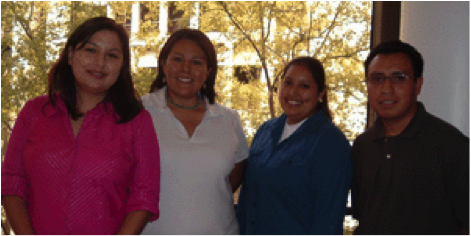
In 2003, the School of Information received one of the first “Laura Bush Librarians for the 21st Century” grants to launch, “Honoring Generations: Developing the Next Generation of Native Librarians.” [http://www.ischool.utexas.edu/~hg/] Graduates of the program are working in libraries and archives in Arizona, New Mexico, Utah, Colorado, Ohio, Texas, and Mexico. While we do not have current targeted funding for Honoring Generations, the School of Information continues to welcome applications from students interested in pursuing careers involving serving Native communities. The presence of Native students and faculty on the UT-Austin is growing in numbers and attention as the Indigenous Studies Initiative draws more interest. [http://www.utexas.edu/diversity/ddce/isi/index.php] Check the admissions area on the iSchool website [http://www.ischool.utexas.edu/admissions/] for information on applying and/or contact Dr. Roy directly at loriene@ischool.utexas.edu. See the following articles for information about Honoring Generations and recruitment of indigenous students into LIS fields.
Loriene Roy and Sha-Li Zhang, "Recruiting Future Librarians from Diverse Backgrounds: Model Projects In the United States," Journal of Library & Information Science 37 (1) (April 2011): 73-80. http://jlis.glis.ntnu.edu.tw/ojs/index.php/jlis
Loriene Roy and Sha-Li Zhang, “Collaborative Projects to Recruit Future Librarians From Diverse Backgrounds,” Proceedings, Libraries in a Multicultural Society: Possibilities for the Future, IFLA Section on Library Services to Multicultural Populations Satellite Meeting, Copenhagen, Denmark, August 18, 2010.
Loriene Roy and Antony Cherian, “Honoring Generations: Recruiting Native Students Into Careers in Librarianship,” Public Libraries 45 (1) (January/February 2006): 48-52.Loriene Roy, Glendora Johnson-Cooper, Cynthia Tysick, and Daisy Waters) “Bridging Boundaries to Create a New Workforce:
A Survey of Spectrum Scholarship Recipients, 1998-2003.” Available at
http://www.ala.org/ala/diversity/spectrum/spectrumsurveyreport/spectrumsurvey.html. Accessed on 6 August 2006.
Loriene Roy, “Creating Opportunities and Opening Doors: Mentoring Students of Color,” In Wheeler, Maurice, ed. Unfinished Business: Race, Equity, and Diversity in Library and Information Science Education (Metuchen, NJ; London: Scarecrow, 2005), 131-146.
Loriene Roy, “Diversity in the Classroom: Incorporating Service-Learning Experiences in the Library and Information Science Curriculum,” In Neely, Teresa Y. and Kuang-Hwei (Janet) Lee-Smeltzer, eds. Diversity Now: People, Collections, and Services in Academic Libraries (Binghamton, NY: Haworth Press, 2001), 213-228.
Dr. Roy has written a number of publications that look at the impact of IT on Native peoples and how IT supports—or doesn’t support—indigenous cultural models. These publications include:
EDITED SPECIAL JOURNAL ISSUE: Loriene Roy and David Raitt, “The Impact of IT on Indigenous Peoples,” The Electronic Library 21 (5) (2003).
OTHER PUBLICATIONS:
Loriene
Roy, Hsin-liang Chen, Antony Cherian, and Teanau Tuiono, “The Relationship of
Loriene
Roy, “Building Tribal Community Support for Technology Access,” The Electronic Library 24 (4) (August
2006): 517-529.
Paul
Resta, Mark Christal, and Loriene Roy, “Digital Technology to Empower
Indigenous Culture and Education,” In World
Yearbook of Education 2004: Digital Technologies, Communities, and Education (London; New York:
RoutledgeFalmer, 2004), 179–195.
Loriene
Roy and Antony Cherian, “Indigenous Peoples and Information Technology,” In
Osborne, Robin, ed. From Outreach to
Equity: Innovative Models of Library Policy and Practice (Chicago: American
Library Association, 2004), 58-60.
Loriene
Roy and David Raitt, “The Impact of IT on Indigenous Peoples,” The Electronic Library
21 (5) (2003): 411-413.
Loriene
Roy and Antony Cherian, “Information Technology and Educational Achievement for
Indigenous Peoples,” In 2002 Annual
Conference of LIANZA (Library & Information Association of New Zealand
Aotearoa) Proceedings (Wellington, Aotearoa/New Zealand, November 2002).
[CD ROM]
Loriene
Roy, “Four Directions: An Indigenous Educational Model,” Wicazo Sa Review 13 (2) (Fall1998): 59-69.
Tribal Information Centers, Including
Libraries and Archives
Dr. Roy’s writings include publications that introduce tribal information centers and/or address issues of their concern. This is the focus of the following publications:
EDITED SPECIAL JOURNAL ISSUE: Loriene Roy and Peter Sarri, “Indigenous Librarianship,” World Libraries 12 (1) (Spring 2002).
OTHER PUBLICATIONS:
Loriene Roy, Anjali Bhasin and Sarah K. Arriaga. Tribal Libraries, Archives, and Museums: Preserving Our Language, Memory and Lifeways. Lanham, MD: Scarecrow, 2011.
Loriene
Roy, “Preface: Indigenous Peoples and Librarianship,” World Libraries 12 (1) (Spring 2002): 29- 31.
Loriene Roy and A. Arro Smith, “Supporting, Documenting, and Preserving Tribal Cultural Lifeways: Library Services for Tribal Communities in the United States,” World Libraries 12 (1) (Spring 2002): 55-65.
Loriene Roy and Daniel L. Alonzo, “Perspectives on Tribal Archives,” The Electronic Library 21 (5) (2003):422-427.
Loriene
Roy, “From Tribal Records Repository to Corridor on Powwow Super Highway:
Library Development for American Indians Since the Late 1960s,” Svensk Biblioteksforskning (Swedish Library
Research) 14 (3) (2002): 127-134.
Loriene
Roy, “To Support and Model Native American Library Services,” Texas Library Journal 76 (1) (Spring 2000): 32-35.
Loriene
Roy, “The International Indigenous Librarians’ Forum: A Professional
Life-Affirming Event,”
World
Libraries10 (1/2) (Spring/Fall 2000): 19-30.
Loriene
Roy, “Indigenous Peoples and Library Services in the United States,” In
Szekely, Chris, ed.
Issues and Initiatives in Indigenous
Librarianship (Auckland, New Zealand: National Library of New Zealand, 1999), 36-48.
Loriene
Roy, “Dream Catchers, Love Medicine, and
Fancy Dancing: Selecting Native American Studies Material in the Humanities,” The Acquisitions Librarian 17/18
(November 1997): 141-157.
Loriene
Roy and Laurence Patrick Goines, “Electronic Communication for and about Native
Americans,” FID News Bulletin 44 (11)
(November 1994): 286-289.
Loriene
Roy, “Recovering Native Identity: Readers' Advisory Services for
Non-Reservation Native Americans,” Collection
Building 12 (3/4) (Summer 1993): 73-77.

An ecology of indigenous librarianship is concerned with a balance of workways and lifeways, including wellness. Dr. Roy is interested in the place and implementation of workplace wellness. See two of her background articles introducing these topics. And, visit her Workplace Wellness website, created by former student, Henry Stokes, at http://www.ischool.utexas.edu/~loriene/wellness/.
Loriene Roy, “President’s Message: Circle of Wellness,” American Libraries 39 (6) (June/July 2008): 8.
Loriene Roy, “Wellness: For Our Communities, For Ourselves,” In 2007 Trejo Foster Foundation Institute Proceedings (Tucson: Trejo Foster Foundation, 2008). Available at: http://www.sir.arizona.edu/trejo/roytext.pdf. Accessed on 5 August 2007.
In fall 2011, Dr. Roy received a Regional Symposium Award through the National Network of Libraries of Medicine (NN/LM) South Central Region to support a Workplace Wellness@Your Library Symposium. This project was funded in whole or in part with Federal funds from the National Library of Medicine, National Institutes of Health, under Contract No. HHSN-276-2011-00007-C with the Houston Academy of Medicine-Texas Medical Center Library. The first annual Workplace Wellness@Your Library Symposium took place 23-24 March 2012.
Publications resulting from this event include contributions to Library Worklife:
“Workplace Wellness@Your Library Symposium: What We Learned!,” Library Worklife 9 (8) (August 2012). Available at: http://ala-apa.org/newsletter/2012/08/13/workplace-wellnessyour-library-symp osium-what-we-learned/. Accessed on 23 August 2013.
“Wellness Through Reflection: Recalling the Past and Envisioning the Future,” Library Worklife:HR E-News for Today’s Leaders 9 (5) (May 2012). Available at: http://ala-apa.org/newsletter/past-issues/volume-9-no-5-may-2012/. Accessed on 10 May 2012.
“First Thoughts from a Workplace Wellness@Your Library Symposium,” Library Worklife: HR E-News for Today’s Leaders. 9 (4) (April 2012). Available at http://ala-apa.org/newsletter/past-issues/volume-9-no-4-april-2012/. Accessed on 10 May 2012.
“We Come from the Four Directions: Sharing Our Stories of Workplace Wellness@Your Library,” LibraryWorklife: HR E-News for Today’s Leaders. 9 (3) (March 2012). Available at: http://ala-apa.org/newsletter/2012/03/06/we-come-from-the-four-directions-sharing-our-stories-of-workplace-wellnessyour-library/. Accessed on 12 March 2012.
“Workplace Wellness@Your Library: A Symposium,” Library Worklife: HR E-News for Today’s Leaders. 9 (2) (February 2012). Available at: http://ala-apa.org/newsletter/2012/02/04/workplace-wellnessyour-library-a-symposium/. Accessed on 14 February 2012.
Past projects include information literacy tutorials and website redesigns for patrons of the Sitting Bull Tribal College Library, studies of recruitment of students from underrepresented groups into the LIS professions, the creation of a virtual library for tribal college students, a website introducing content related to a film by a Navajo filmmaker, a bridge to WebJunction for tribal librarians, and virtual tours developed with tribal students for the National Museum of the American Indian.
Sitting Bull Tribal College Library
In spring 2012, students in the “Library Instruction and Information Literacy” course worked with the Sitting Bull Tribal College Library staff to consult on website revisions and to create tutorials on the use of specific library resources. This included an Overdrive Tutorial in MSWord.docx format and the following tutorials available as YouTube videos:
AGRICOLA Tutorial: http://www.youtube.com/watch?v=dRNEN_sbPmc
Proquest Newspaper Database Tutorial: YouTube link: http://youtu.be/xz2TnhHqkUA
LearningExpress Library Tutorial: https://www.youtube.com/watch?v=-MnGAp6Wuw4
EBSCO ERIC Database Tutorial: https://www.youtube.com/watch?v=ZRFyZ3YXp1o&feature=relmfu
The citation for the full report is: Loriene Roy, Glendora Johnson-Cooper, Cynthia Tysick, and Daisy Waters, “Bridging Boundaries to Create a New Workforce: A Survey of Spectrum Scholarship Recipients, 1998-2003.” Available at http://www.ala.org/ala/aboutala/offices/diversity/spectrum/spectrumsurveyreport/spectrumsurvey.cfm. Accessed on 4 March 2011.
Students in the spring 2004 “Library Instruction and Information Literacy” class created a website to introduce content on WebJunction. Org to tribal libraries. This site is linked at: http://www.ischool.utexas.edu/~loriene/nativebridge/index2.htm
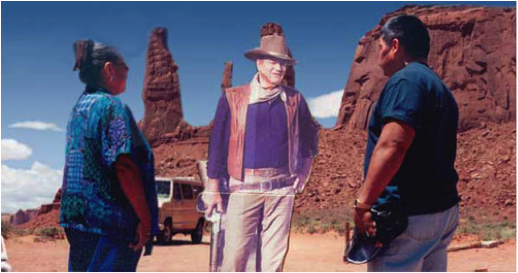
Students in the spring 2004 “Library Instruction and Information Literacy” class created a website to introduce content on WebJunction. Org to tribal libraries. This site is linked at: http://www.ischool.utexas.edu/~loriene/nativebridge/index2.htm
Students in the spring 2002 “Library Instruction and Information Literacy” class created a virtual library of education resources for Northwest Indian College in Lummi, Washington. Reports of this work are available in these publications. The site can be viewed at: http://www.gslis.utexas.edu/~vlibrary/
(with Aimee Akerman) “OKSALE: Building a Culturally Responsive Virtual Library of Education
Resources for a Tribal College,” Education Libraries 25 (2) (Winter 2002): 26-28.
(with Peter Larsen) “Oksale: An Indigenous Approach to Creating a Virtual Library of Education
Resources,” D-Lib Magazine 8 (3), <http://www.dlib.org/dlib/march02/roy/03roy.html>,
(March 2002).
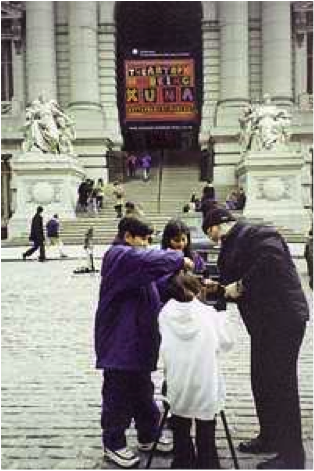
In 1998, Dr. Roy was involved with tribal students, educators, and faculty and students from the University of Texas at Austin in creating online versions of exhibits at the National Museum of the American Indian. The link to the first exhibits is located here: http://www.nmai.si.edu/exhibitions/all_roads_are_good/. Reports on the project were published here:
Mark Christal, Loriene Roy, Antony Cherian, “Stories Told: Tribal Communities and the Development
of Virtual Museums,” Journal of Internet Cataloging: The International Quarterly of Digital
Organization, Classification and Access 7 (1) (2005): 65-88.
Mark Christal and Loriene Roy, “Digital Repatriation: Constructing a Culturally Responsive Virtual
Museum Tour,” Journal of Library and Information Science 28 (1) (April 2002): 14-18.
Mark Christal, Paul Resta, and Loriene Roy, “Virtual Museum Projects in Native America,” ERIC
Update 23 (2) (December 2002), Feature Article: 1-4.
Mark Christal, Marty Kreipe de Montano, Paul Resta, and Loriene Roy, “Virtual Museums from Four
Directions: An Emerging Model for School-Museum Collaboration,” CSS Journal: Computers in
the Social Studies 9 4) (October/December 2001) <http://www.webcom.com/journal/)
Mark Christal, Paul Resta, and Loriene Roy, “Virtual Museum Projects in Native America,” Teaching
for Equity 2003: 162-164. Available at http://www.smallschoolsproject.org/.
Paul Resta, Marty Kreipe de Montano, Mark Christal, and Loriene Roy, “Digital Repatriation: Virtual
Museum Partnerships with Indigenous Peoples,” In International Conference on Computers in
Education, Proceedings of the International Conference on Computers in Education (ICCE) 2002,
1482-1483.
Loriene Roy and Mark Christal, “Digital Repatriation and the Development of a National Virtual
Museum of the American Indian,” In The Barents Libraries Conference: Report From a
Seminar at Ajtte, Swedish Mountain and Sami Museum, September 10-12 2001 (Jokkmokk,
Sweden: Ajtte, 2002), 41-45.
Loriene Roy and Mark Christal, “Creating a Virtual Tour of the American Indian,” In Sullivan, Robert,
ed. Proceedings of the International Indigenous Librarian’s Forum (Auckland, New Zealand,
2001), 66-74.
Mark Christal, Marty Kreipe de Montano, Paul Resta, and Loriene Roy, “Virtual Museums from Four
Directions: An Emerging Model for School-Museum Collaboration,” World Conference on
Educational Multimedia, Hypermedia and Telecommunications 2001 (1) 289-294. Available at
<http://dl.aace.org/8452)
Mark Christal, Marty Kreipe de Montano, Paul Resta, and Loriene Roy, “Virtual Museums from Four
Directions: An Emerging Model for School-Museum Collaboration,” In Ed-Media Conference
Proceedings (Tampere, Finland, June 25-30, 2001). [CD ROM]
Antony Cherian, Mark Christal, Marty Kreipe de Montano, Paul Resta, and Loriene Roy, “Virtual
Museum Collaborations for Cultural Revitalization: The Four Directions Model,” In Museums
and the Web 2001 Proceedings, (Seattle, WA, March 2001). [CD ROM]
Antony Cherian, Mark Christal, Marty Kreipe de Montano, Paul Resta, and Loriene Roy, “Virtual
Museum Collaborations for Cultural Revitalization: The Four Directions Model,” Museums and
the Web 2001. Available at <http://www.archimuse.com/mw2001/papers/speakers/>, March
2001.
Loriene Roy and Mark Christal, “Creating a Virtual Tour of the American Indian,” In National
Association of Native American Studies. 2000 Conference Proceedings (Houston, TX, August,
2000), 304-330.
Paul Resta, Mark Christal, and Loriene Roy, “Creating a Virtual Tour of the American Indian,” In
Proceedings of the National Educational Computing 2000 Conference (NECC) (Atlanta, GA,
June 2000). [CD ROM]